Unlocking economic potential with language learning

Samantha Ball
Coworkers talking together in an office by windows
Okuma zaman?: 5 minutes

As demographic shifts and technological advancements reshape the global workforce, the gap between the skills people have and the skills they need continues to widen. This "skills chasm" is particularly evident in language learning, where traditional education systems often fail to keep pace with the demands of the modern economy.

Unlocking economic potential with language learning
Gizlilik ve ?erezler

??eri?i izleyerek, ÃÛÌÒapp'?n bir y?l boyunca pazarlama ve analiz amac?yla izleyici verilerinizi payla?abilece?ini ve bunu ?erezlerinizi silerek geri alabilece?inizi onaylam?? olursunuz.?

The skills chasm in language learning

Demographics and technological disruption

The aging population and declining birth rates mean fewer young people are entering the workforce, including roles that require multilingual capabilities. , highlighting the need for lifelong language learning to keep older workers engaged and productive.

Also, advancements in AI are reshaping the learning and usage of languages in professional settings. Tools like language translation services and learning applications are increasing the demand for employees who can utilize these technologies and adapt to evolving linguistic tools.

By 2030, i, including language capabilities, which will require ongoing improvements in language proficiency. In our report, How English empowers your tomorrow, 40% of survey participants expressed concern that AI could replace their jobs within the next five years. Mastery of English is considered essential for securing careers in a landscape heavily influenced by new technologies and AI.

Economic stakes and language learning

Economic growth

Enhanced language skills can significantly contribute to economic growth. For instance, a one-standard-deviation increase in cognitive skills, which includes language proficiency, is in a country¡¯s annual economic growth. This highlights the economic value of investing in language education.

Transition losses

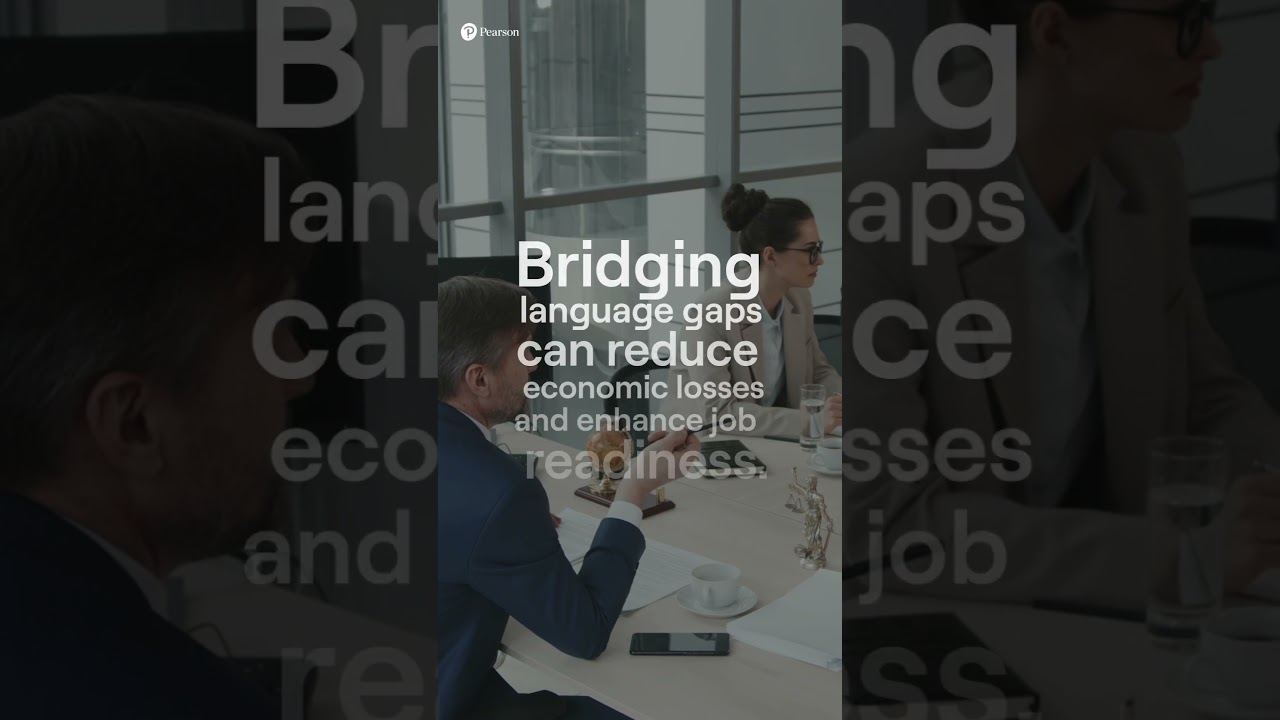
In language learning, transition losses refer to delays in acquiring essential language skills for employment. Bridging these gaps can lessen economic losses and enhance job readiness.

, with a considerable amount stemming from skills gaps, including language proficiency. Our survey results show that those employees who work for a company that offers language training are more than twice as likely to say that they are very satisfied with their job than those working for companies that do not offer any language training.?

However, only 33% of learners indicate that their employer provides language training. Happier employees are more inclined to remain with their company longer, thereby reducing overall turnover costs

Learning to learn

Emphasizing learning-to-learn skills in corporate training for HR professionals can enhance efficiency in employee development. Metacognitive strategies, such as self-assessment and goal setting, help employees retain and apply new concepts and skills more effectively. By investing in and implementing solutions that address these needs, businesses can cultivate a more competent and adaptable workforce. Tools like 'Mondly by ÃÛÌÒapp' can support their learning.

Aligning with market needs

Language learning pathways should be aligned with labor market needs. Industries such as international business, tourism, and diplomacy require specific language skills that should be integrated into educational programs. Creating adaptive and transparent pathways for language learning can help individuals navigate their careers more effectively. For help on aligning language skills with jobs, make sure to look at our GSE Job Profiles.

Flexible pathways

Establishing adaptable and clear pathways for language acquisition is crucial. This involves providing modular courses, certifications, and opportunities for real-world language practice. For instance, virtual reality training can create realistic language-use scenarios, guiding learners in determining if they should change their course. For example, ÃÛÌÒapp has an AI-driven language training tool named Digital Language Tutor, designed to assist learners in realistic language environments.

The path forward: Investing in language learning for economic success

For HR professionals and decision-makers, the message is clear. Investing in language learning is a strategic economic imperative.?Bridging language learning can enhance employee potential while driving significant economic growth and reducing transition losses.?

The future of work demands a proactive approach to language learning, ensuring that individuals and organizations are equipped with the skills they need to thrive in a globalized economy. and find out how to close it with language learning.

More blogs from ÃÛÌÒapp

  • Youung adults outside dressed up warm chatting together
    Celebrating global holidays: Inclusive festive activities for your English classroom
    By
    Okuma zaman?: 4 minutes

    Across classrooms, holidays show up as stories, songs, recipes, colors and customs. For English educators, they also offer language tasks that build communication, intercultural understanding and community. The key is to celebrate in a way that¡¯s inclusive, academically rich, and respectful of diverse beliefs and backgrounds. Here are some activities you can do this festive season with minimal fluff and maximum impact, each tied to clear language objectives.

    Principles for inclusive festive learning

    • Student choice: Invite learners to showcase their traditions, for example, Diwali, Lunar New Year, Eid, Hanukkah, Christmas, D¨ªa de los Muertos, Nowruz or a seasonal theme without a religious focus.
    • Language-first design: Anchor activities in explicit objectives ¨C for example, ¡°Can describe customs and traditions,¡± ¡°Can compare events,¡± ¡°Can write instructions¡± ¨C to ensure measurable progress.
    • Do-no-harm approach: Provide opt-in alternatives, avoid stereotyping and create space for students who do not celebrate holidays.
    • Representation: Use materials that reflect multiple regions and voices. Encourage translanguaging to deepen understanding and honor identity.
    • Accessibility: Scaffold with visuals, sentence frames and leveled texts so every learner can contribute meaningfully.
  • students sitting outside on a wall together looking at a laptop together
    Using the principles of Japanese philosophy to improve the quality of our teaching
    By Michael Rost
    Okuma zaman?: 5 minutes

    Learning a new language opens doors to unique ways of thinking and feeling, deeply rooted in culture. As teachers, we have the privilege of guiding learners to these insights, helping them broaden their worldview.

    When I first moved to Japan, I was struck by concepts like?wa?(ºÍ, social harmony),?enryo?(ßh, restraint out of respect)?and?gaman?(ÎÒÂý, patient endurance). Discovering these ideas was energizing?and made learning Japanese feel like more than just mastering a new language ¨C it was about embracing a vibrant culture.

    I soon found?that many expats shared similar experiences. In my first year teaching in Japan, over 40 years ago, I met Marc Helgesen at one of the first JALT meetings. We connected over our shared interest in developing a revolutionary approach to language teaching in Japan ¨C a kind of?kakushin?(¸ïÐÂ), or innovation, that challenged the status quo.

    Our collaboration led to many teaching experiments and, eventually, the publication of English Firsthand as a single-level course in 1985.

  • Two business women talking together at a computer
    Measuring the ROI of Business English (Part 1): How the GSE and KPIs drive real impact
    By
    Okuma zaman?: 5 minutes

    An L&D manager opens a slide deck and says, ¡°Seventy people are on Business English this quarter. The feedback is positive. Here are a few quotes.¡± A finance manager nods, then asks the only question that really matters when budgets are tight:

    ¡°What measurable change has this brought about in the business?¡±

    If that scene feels familiar, you¡¯re not alone.

    It¡¯s almost clich¨¦ to say that English is no longer a nice-to-have in business. Across sectors, it¡¯s a standard requirement across sectors. Leaders are demanding results, and employees who increasingly value the confidence that English brings, as ÃÛÌÒapp¡¯s 2024?report clearly shows. And yet, many organizations still treat language training as a recurring calendar entry rather than a strategic lever. Classes happen, materials circulate, learners attend. Business as usual.

    Then the inevitable question arrives: Is this actually working?

    The question ¡°What¡¯s our ROI (Return on Investment) on Business English courses?¡± echoes across the boardroom table. Out come the attendance charts, school-issued progress reports, maybe a few glowing comments. Useful? The Germans would say jein, yes and no (and of course they have a word for that).

    The case for measuring what matters

    If the above sounds familiar, or if I¡¯ve simply managed to grab your attention, keep reading. Over this short two-part series, I¡¯ll show how to build a measurement philosophy for language training using KPIs, explain why independent assessment via the Global Scale of English (GSE) is your best ally, and illustrate how all these datapoints come together in the only metric every boardroom finds attractive: ROI.

    I¡¯ll also show how the ÃÛÌÒapp English International Certificate (PEIC) ticks that final box of recognition and reward. Although this post is primarily aimed at business stakeholders, I invite everyone in the EFL world to see how the GSE can serve as a business tool, alongside its methodological prowess.

    KPIs: small, steady, and meaningful

    In learning and development, measurement works best when it¡¯s little and often. KPIs shouldn¡¯t be an autopsy at the end of a course; they should be pulse checks along the way, data you can act on.

    Short feedback loops after sessions, mid-course benchmarks, quick manager observations on behavioural change - these aren¡¯t just admin exercises. They¡¯re your early-warning and early-celebration system rolled into one.

    I like to think of KPIs as chapters in a coherent story. Each chapter answers a different question, and together they tell a narrative that HR, L&D and the board can all buy into.

    Let¡¯s start with participation and regularity. Are people showing up and staying engaged? Track attendance, lateness and, for online components, log-ins and time on task. That¡¯s your health check. If the numbers drift, then scheduling or content might need a rethink, ideally in tandem with your provider (trust me, collaboration here pays off).

    Then there¡¯s progress in level and skills. Here, independence matters. Use baseline, mid-course and endline tests that are external to the training provider and mapped to the GSE. Because GSE operates on a 10¨C90 scale, it captures micro-progress that broad CEFR bands simply miss. Where the CEFR might still say ¡°B1¡±, the GSE can show movement from 48 to 53. A few GSE points may not sound like much, but in the world of adult learning, that¡¯s a genuine success story. Where CEFR might suggest stagnation, or plateauing, as we call it in Applied Linguistics - the GSE tells you the learning curve is alive and kicking.

    And finally, application on the job. Is the business experiencing tangible benefits from improved communication? And since our learners are the heart of any programme, their satisfaction and motivation levels are equally telling. Low energy or disengagement is often the first sign something¡¯s off, long before the test scores flatten.

    These KPIs are deliberately mixed, with some being complex numbers and others experience-based. That¡¯s intentional. Research in e-learning shows you need both if you want to understand what¡¯s really happening in a course, not just what appears in the final test report.

    Why GSE changes the game

    The GSE isn¡¯t just a theoretical framework, it¡¯s an ecosystem: ?courseware, AI-driven assessments, analytics, the works. My experience as an LSP (Language Service Provider) owner and Head of Studies at has taught me one thing: using third-party, reliable and organization-agnostic testing gives us a massive advantage. Businesses are often promised "pies in the sky". The problem? Those pies are frequently baked and taste-tested by the same baker.

    Independent, GSE-based assessment is a genuine USP.

    It¡¯s external to the language services provider, which makes the data credible to L&D, HR and, most importantly, the board. It¡¯s granular, so it captures those subtle wins that keep learners motivated. And it¡¯s consistent across time and cohorts: gold dust when budgets are tight and every line item gets scrutinised.

    When you can say, ¡°We measure independently, we¡¯re aligned, and here¡¯s evidence of real progress¡±, you¡¯ve earned yourself something priceless: a protected budget.

    Coming up next

    In the next post, I¡¯ll move from "how" to "why", showing how these insights translate into measurable business outcomes. We¡¯ll talk ROI: the costs (both obvious and hidden), the returns (both hard and soft), and the benchmarks that make all the difference. Because when you measure smartly, with GSE as your compass, everyone wins: learners, managers, HR and yes, even the boardroom sceptics.