Effective classroom management routines for very young learners

Jeanne Perrett
A teacher with young students sitting at a table looking at flashcards
Reading time: 4 minutes

For very young learners, children aged 3-6, being in a classroom might be a completely new experience. Most of them won’t know any English words at all and might have very little idea of what English is or why they are learning it. Some of them may not yet be completely fluent in their mother tongue.Ìý

At the beginning of the school year, some of them may find it distressing to be separated from their parents and they also have to learn to get along with their new classmates.Ìý

If we want to keep them comfortable and safe and provide a friendly and welcoming environment, we need to establish routines.Ìý

7 ways you can build routines into your classes

Here are some areas where you can easily incorporate classroom management routines into your English language class.

1. Think about your target language

Our target language for each lesson may be one or two short phrases or a few new words. We should always keep the presentation and practice of this simple and clear.Ìý

However, we can use English for all our greetings, praise, instructions and explanations. After a few days, the children will begin to expect it and they will gradually understand what you are saying.Ìý

2. Coming into the class

Take time to greet each child by name when they enter the classroom and encourage them to learn and use each other’s names too. This will change how they perceive themselves and each other and encourage friendly communication.Ìý

Notice the small things about each child. They might have a new T-shirt on or have done their hair specially. They may not tell you that they have made an effort to look nice for their lesson, but they will be pleased when you notice and will feel encouraged to continue.Ìý

3. Circle time

Make circle time the start of every lesson. It gets the children sitting down together and this helps them to get to know each other and feel part of a comfortable group.Ìý

It’s the time where you present the target language for the day. Use a puppet to help you do this. Make the puppet part of the routine by keeping it in a certain place and bringing it out from there every day. The children can call its name.Ìý

The puppet can greet the children by name and the children can answer back. First, use picture cards or objects to present the language to the puppet. Then, the puppet can show that it understands or ask for repetition.Ìý

Let the children call out responses as a group. As they build their confidence in English they will want to speak by themselves.Ìý

Always accept approximations of words and phrases. Rather than correcting the children, continue to model the words and gradually the students will self-correct. Pass this tip on to parents too.Ìý

4. Book time

Give students time to discover pages and images they like in the books they are using. Always leave time to help each child find the correct page and then help them to focus their attention on that page.Ìý

In Circle time you have introduced the language and presented it with flashcards or objects. In Book time, children can look at these images – the content will be familiar and they will start to feel ownership of what they are learning.Ìý

5. Songs, games and miming

Singing, playing games and miming are the main ways in which the students will start to freely use and show they understand the target language.Ìý

In My Disney Stars and Friends each stage of every game is detailed, along with the language you and the students can use. Students might become so involved in the action of the game that they forget to speak in English! That’s okay – continue using the language and eventually they will start to use it too.Ìý

When a game or a song involves physical activity, have drinks of water ready and let them rest and relax afterwards. Always have a ‘sitting down’ activity ready for them to move on to so that they do not become overexcited or tired.

6. Craft and stickers

For any craft work there are four stages: preparation, production, playing with the completed craft work and tidying up. If you're using My Disney Stars and Friends, there is a special Tidy Up song and all the craft projects are press-outs so there is no need for scissors.Ìý

Children of 3 or 4 years old will need to learn how to unpeel and then re-stick a sticker. Allow time for this and encourage them to learn from each other once some of them have mastered this fine motor skill.Ìý

7. Leaving the class

Time your lessons so that the students don’t have to leave in a rush. It takes them a while to collect up their things and find their bags and coats.Ìý

If you want the parents to know something, make sure that the children know where they have put the note. One notebook for such messages is a simple way of doing this, and you can tell parents to check it after every lesson.Ìý

Just as you greeted each child by name when they came in, say goodbye to them individually as they leave.Ìý

Incorporating effective classroom management routines makes young learners feel more comfortable as they know what to expect from their language classes. Familiarity is welcome for children, so exploit these times for more language learning opportunities.Ìý

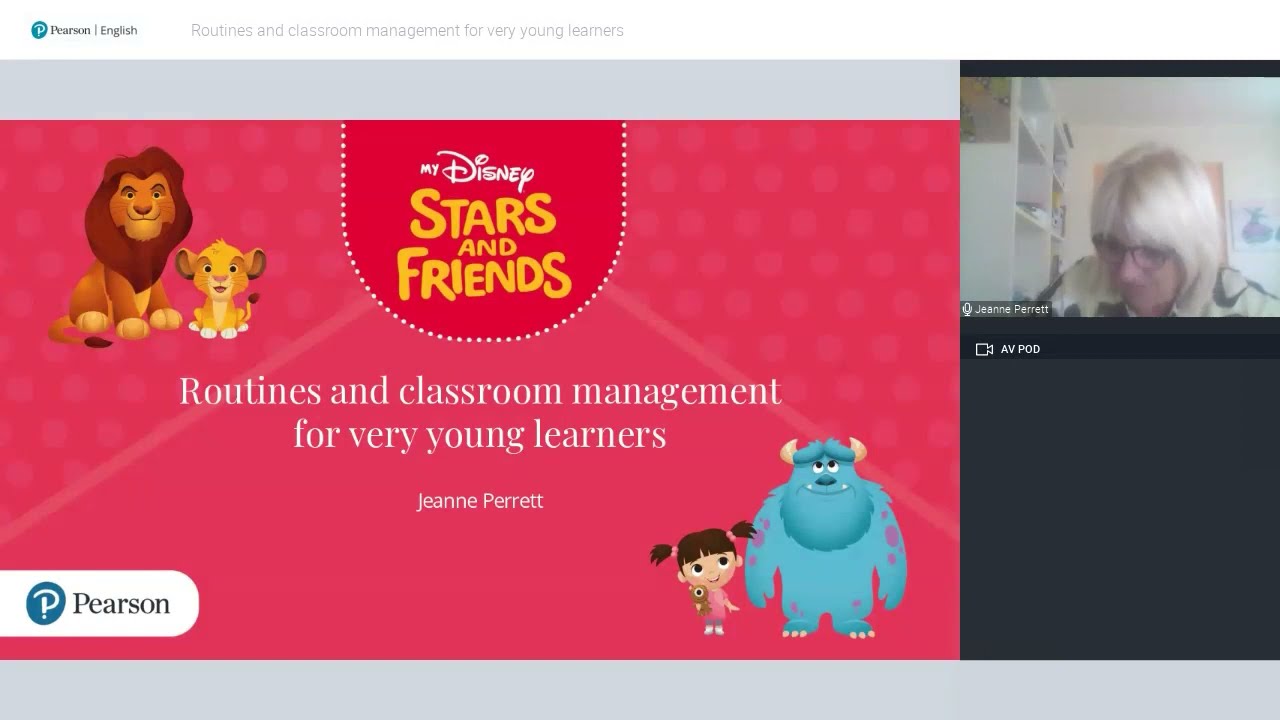
Find more ideas on effective classroom management routines in Jeanne Perrett’s webinar, where she focuses on practical ideas and teaching tips for how we can organise and manage a class of young learners.

Routines and classroom management for very young learners I ÃÛÌÒapp English Disney Day
Reproducir
Privacy and cookies

By watching, you agree ÃÛÌÒapp can share your viewership data for marketing and analytics for one year, revocable by deleting your cookies.

Want to learn more about teaching young learners? Read our post 'Young learners of English deserve more'.

More blogs from ÃÛÌÒapp

  • A woman and a man talking together

    4 ways to improve your students' intelligibility

    Por

    Intelligibility is the art of being understood by others. Many students think they need to speak a language flawlessly and with a native-like accent to make themselves clear, but this is not quite true.

    While there is a correlation between proficiency and intelligibility, even students of lower general proficiency are capable of expressing what they mean, in a way that the listener understands, if they are using good intelligibility practices.

    Being understandable in a second language is often extremely important in work environments, especially as the world becomes more connected and job markets more competitive.Ìý

    Intelligibility is a vital aspect of communication but it is not exactly a skill in itself. Instead, it is a combination of fluency, pronunciation, and managing your speed of speech. To reflect how important this is for language learners when studying, traveling or at work, we use an Intelligibility Index as part of our Versant English Test scoring.

    This index is based on factors affecting how understandable speech is to fluent English speakers. These include things like speed, clarity, pronunciation and fluency. Ranging from 1 (low) to 5 (high), the Intelligibility Index shows how intelligible someone’s speech in English is likely to be in a real-world situation.

    Let’s go into some activities and exercises you can try in class to help your students improve their intelligibility with their English and speaking skills.

  • Children singing in a line holding song sheets, with a teacher singing facing them

    How to incorporate music into the classroom

    Por ÃÛÌÒapp Languages

    Learning English with music can enhance learning and create a more engaging and dynamic classroom environment. In a previous post, we discussed if music can help you learn a language; this post looks at how music can be incorporated into the classroom.

    Using music in your classroom can help improve student motivation, focus, and retention of information. Here are some ways you can use music to enhance your classroom teaching:

    Ìý

  • A person smiling outdoors with headphones in their ears

    Can music help you learn languages?

    Por

    Learning a new language can be daunting, requiring time, effort, and consistent practice to master. One learning tool that’s been researched and examined over the years for its effectiveness, is music and sound.
    Music is sometimes overlooked or forgotten about, but it can be a beneficial tool when learning a new language. Today we will explore how music can aid language learning and what benefits it can provide. Here’s how:

    Recollection and memory

    Song is a powerful tool that can help us memorize new words and phrases. When listening to a song, recollecting the lyrics and melody long after it's finished can often happen. This is because our brains retain information better when associated with a melody/rhythm.

    Research has found that exposure to a language's rhythm leaves a lasting impact on a person's ability to segment speech patterns[1]. Listening to songs in a foreign language can help learners memorize new words, patterns and phrases more easily.

    Pronunciation and tone

    Music can improve our pronunciation and tone. When singing along to music, listeners may mimic the singer's pronunciation and cadence when listening to a song. This can help us develop a more natural and authentic accent when speaking the language.

    Additionally, it can broaden our knowledge and comprehension of diverse dialects and accents. Exposure to different accents and pronunciations can make real-world interactions with a foreign language less daunting or confusing.

    Two people may speak the same language but pronounce words very differently due to accents, a great example of this is in the UK and how the English language varies throughout areas.

    In the UK, someone from the north may sound completely different to someone from the south, despite speaking the same language. So if you were trying to learn English with music and listened to English songs from different parts of the country, you'd be exposing yourself to different accents. Making yourself more familiar with the varied pronunciation.

    Cultural understanding

    It can expose us to the culture of the language we are learning. Music can be a deep-rooted part of a culture, and hearing music in a different language can provide insight into that culture's beliefs, practices, and heritage. This can give us a deeper understanding of the language and help us communicate more effectively with fluent speakers.

    Often, songs use informal language and slang words we may not otherwise know or make us aware of a culture's situation or troubles. Academics Mark Gant & Dr. Carmen Fonseca-Mora discuss how although no one type of music works the best, foreign protest songs are a good example.

    They're typically motivational, clear, and repetitive and give an insight into a country's culture without causing problems for the learners. Listeners may even feel inclined to discuss or research that situation – which could be a good learning opportunity.

    Listening skills

    In addition, music can improve our listening skills. When we listen to a song in a foreign language, we’re often compelled to pay close attention to the lyrics, melody, and rhythm. This can help us develop our listening skills and train our ears to distinguish different sounds and accents in the language.

    Being exposed to foreign languages in any output can be beneficial; having the added layers of music adds that little extra challenge for your ears and brain. It’s almost like immersing yourself in the language without the need for traveling.

    An enjoyable way to learn

    Finally, music can make language learning more enjoyable. Learning a new language can be challenging and sometimes even frustrating. However, listening to music in a foreign language can make learning more enjoyable and engaging.

    Singing along with the lyrics can be a fun way to practice the language and boost motivation and confidence. Pairing those with interesting and engaging music videos can also make it more enjoyable. Check out some examples in our postÌý11 great English language song lyrics.Ìý

    So when you find yourself taking on a new linguistic challenge, give music some 'airtime' – and watch how it helps you expand your vocabulary and improve your language skills.